Gas fireplace service & repair in Seattle
Annual gas fireplace tune-ups, and repairs for pilots that won't light, ignitors that click, flames that look wrong and glass you can't see through. Every visit includes a venting and carbon monoxide check. From our base in Redmond, we serve Seattle and the Eastside, including Kirkland, Bellevue, Sammamish and Woodinville.
- Venting and CO check included
- Written quotes before work
- On-time arrival windows
- Free written quote before any work
- Camera photos of what we find
- Serving the Eastside and Seattle
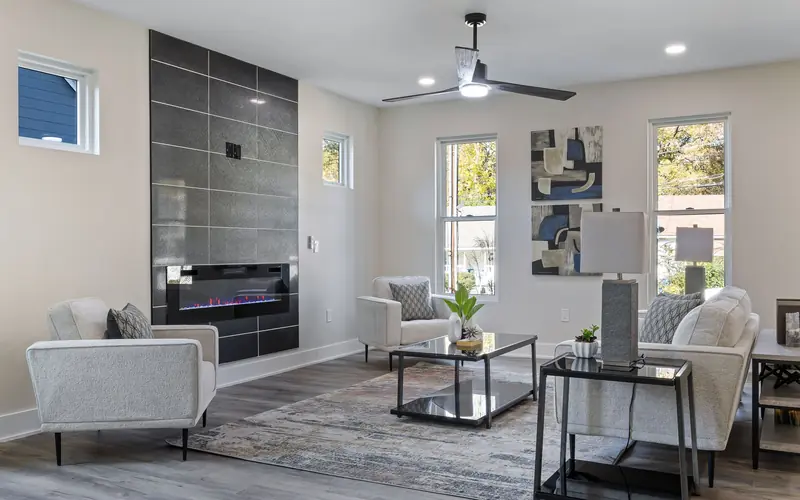
Stock photo (Pexels), for illustration.
How quotes work
Tell us what you need and when. We confirm a real arrival window, inspect, and put the quote in writing so you can decide without pressure.
- We look first, with camera photos of what we find
- You get a clear written quote before any work
- Nothing is added afterward. You approve first
- Real arrival windows, confirmed by text
Smell gas? Don't call us first. Leave the house right away, don't flip switches or use your phone inside, and call 911 or Puget Sound Energy from outside.
Why gas fireplaces need annual service
Gas fireplaces are easy to live with, which is why they get ignored. They don't make creosote, but they still need care:
- Pilots, thermocouples and thermopiles wear out, and dirty ones are the top reason a fireplace won't light or won't stay lit.
- Burners and ports clog with dust, lint and pet hair, leading to weak, uneven or sooty flames.
- Glass gets a white haze that bakes on if it's not cleaned properly.
- Vents and chimneys get blocked by nests, leaves or a loose liner, which can push exhaust and carbon monoxide back into the room.
- Gaskets and seals dry out, and a direct-vent fireplace relies on its seal to keep combustion air separate from your living room.
Most gas fireplace manufacturers recommend a yearly service, and NFPA 211 calls for annual inspection of chimneys and vents. In Seattle, where many homes switched from wood to gas over the years, plenty of gas inserts are venting through old masonry chimneys that haven't been looked at in a long time. That's worth checking. On the Eastside, many homes were built with gas fireplaces from the start, and plenty of them have run for years without a service visit.
What's included in our gas fireplace tune-up
- Safety first: a gas leak check on the fireplace connections and a carbon monoxide test around the unit while it's running.
- Venting check: inspect the vent termination or chimney cap for blockages, nests and damage; on inserts, check the liner connection.
- Burner and pilot cleaning: clean the burner, ports and pilot assembly.
- Thermocouple or thermopile test: measure output so we can catch a failing part before it leaves you without a fire on the first cold night.
- Ignition and controls check: test the ignitor, valve, wall switch, remote and thermostat.
- Logs, embers and media: clean and reposition logs to the manufacturer's layout so the flame burns clean.
- Glass cleaning: remove the white film with a cleaner made for fireplace glass, and check the gasket.
- Fan and blower check, if your unit has one.
- A short written report with anything that needs attention.
Common gas fireplace problems we repair
Pilot won't light or won't stay lit
Usually a dirty pilot assembly, a weak thermocouple or thermopile, or a pilot flame that isn't touching the sensor. We clean and adjust, and replace the part if it's tested weak.
Fireplace clicks but won't ignite
Common on electronic-ignition units. Causes include a worn ignitor, a dirty flame sensor, low batteries in the receiver or remote, or a control module problem.
Burner shuts off after a few minutes
Often a thermopile that's producing just enough power to start but not to hold the valve open, or a safety sensor reacting to a venting problem. The venting cause needs to be ruled out first.
Yellow, sooty or lazy flames
A clogged burner, logs out of position, or a combustion air problem. Sooting on the glass or logs is a sign something's wrong, so don't just wipe it off.
Remote, wall switch or thermostat not working
We test the receiver, wiring and controls and repair or replace what's failed.
Gas smell when the fireplace is on
A faint smell for a few minutes on the first fire of the season is common as dust burns off. A persistent gas smell isn't. Turn the fireplace off and, if the smell continues, leave the house and call 911 or Puget Sound Energy.
Converting from wood to gas
If you're adding a gas insert or gas logs to a wood-burning fireplace, the chimney needs to be inspected and, in many cases, relined first. Start with a Level 2 chimney inspection.
Signs your gas fireplace needs service now
- The pilot goes out on its own, or the fireplace takes several tries to light
- Flames are yellow, tall and lazy, or leave soot on the glass or logs
- A loud whoosh or delayed ignition when it lights
- A persistent odor while it's running
- The glass hazes up quickly after cleaning
- The carbon monoxide alarm sounds, or someone gets headaches or feels nauseous when it's on (turn it off, get fresh air and call 911 if symptoms are serious)
- Rust, water or debris in the firebox, or a damaged vent cap outside
Know your gas fireplace type
| Type | How it vents | What we check |
|---|---|---|
| Direct-vent fireplace or insert | Sealed glass front; pulls outside air in and sends exhaust out through a two-layer pipe, often through the wall | Glass gasket seal, vent termination, clearances |
| B-vent (natural vent) | Uses room air; exhaust rises through a vertical vent or chimney | Draft, vent cap, blockages, spillage at the front |
| Gas logs in a masonry fireplace | Exhaust goes up the existing chimney with the damper open or clamped | Damper clamp, chimney condition, liner, cap |
| Vent-free logs | No vent; exhaust stays in the room | Oxygen depletion sensor, room size, carbon monoxide levels |
Many Seattle homes have gas inserts or gas logs sitting in old brick fireplaces. Those still depend on the masonry chimney above them, so a cracked liner, a missing cap or a bird's nest can affect a gas fire just as it would a wood one. Our tune-up checks the vent path, not just the burner.
Brands we service
If you're not sure what you have, the model and serial number are usually on a plate behind the lower grille. Send us a photo when you book.
Gas fireplaces and Seattle burn bans
Puget Sound Clean Air Agency burn bans restrict wood burning, not natural gas. During a Stage 1 or Stage 2 burn ban, your gas fireplace can still be used. It's one reason a well-maintained gas fireplace is popular in Seattle: it's there when a wood fireplace isn't allowed.
Frequently asked questions
How often should a gas fireplace be serviced?
Once a year. Most manufacturers recommend annual service, and NFPA 211 calls for an annual inspection of chimneys and vents. Schedule it in late summer or early fall, before you need the fireplace.
How much does gas fireplace service cost in Seattle?
It depends on the number of units and what they need. Every tune-up includes cleaning, a parts test, a venting check and a carbon monoxide test, and we give you a clear written quote before any work starts, for tune-ups and repairs alike.
Why won't my gas fireplace pilot light stay lit?
The most common causes are a dirty pilot assembly, a weak thermocouple or thermopile, or a pilot flame that isn't reaching the sensor. A technician can test the part's output and clean or replace it.
Do I need a chimney sweep for a gas fireplace?
You don't need a traditional sweep, because gas doesn't create creosote. You do need the vent or chimney inspected yearly for blockages, nests and damage, and the fireplace itself serviced. Our tune-up covers both.
Can I use my gas fireplace during a burn ban?
Yes. Puget Sound Clean Air Agency burn bans apply to wood-burning fireplaces and stoves, not natural gas fireplaces.
Why is there a white film on my gas fireplace glass?
It's a normal byproduct of combustion that builds up over time. Clean it with a cleaner made for fireplace glass when the unit is cool; regular glass cleaner can bake on and etch it. Heavy or fast buildup can mean the burner needs adjustment.
Is it normal for a gas fireplace to smell?
A light burning-dust smell for a few minutes on the first fire of the season is normal. A smell of gas is not. If you smell gas, leave the house and call 911 or Puget Sound Energy from outside.
How long does a gas fireplace tune-up take?
Most tune-ups take about an hour for one unit, a bit longer if parts need replacing or the vent needs extra attention. We'll let the fireplace cool before cleaning, so plan to leave it off for a few hours before your appointment.
Should my gas fireplace have a carbon monoxide alarm nearby?
Yes. Any home with a gas fireplace, gas furnace or attached garage should have working carbon monoxide alarms, including one on each sleeping level. Washington State building rules require them in most homes. We test for carbon monoxide during every tune-up, but an alarm protects you the other 364 days.
Book your gas fireplace tune-up in Seattle or on the Eastside
Get it serviced before the first cold night. Book online or call (425) 440-0488.
Other chimney and fireplace services
Chimney sweep & cleaning
Full sweep, Level 1 inspection and camera photos of your flue.
Chimney inspection
Level 1, 2 and 3, including real estate and after an earthquake.
Chimney repair
Crowns, caps, dampers, liners, smoke chambers and fireboxes.
Chimney leak repair
Flashing, crowns and brick: we find the source, then fix it.
Masonry & tuckpointing
Mortar matched to older brick, spalled brick and partial rebuilds.
Photos are stock images (Pexels) for illustration. They are not photos of our jobs or crew.